
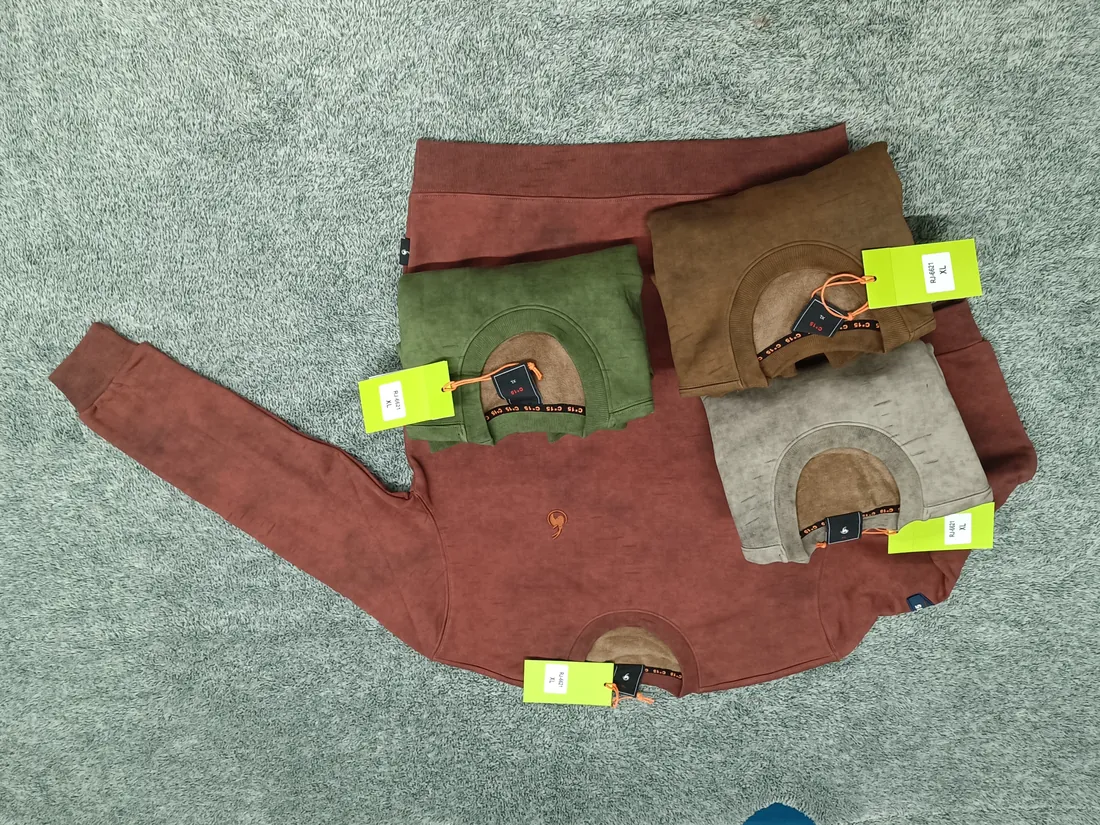
Kathmandu sits at roughly 1,400 metres, which gives it one of the most clothing-hostile climate patterns anywhere: fifteen-degree swings inside a single day, a monsoon that soaks June through September, winters that frost the morning and warm the afternoon, and dust that coats everything between rains. Menswear advice written for London or Delhi simply doesn't transfer. This is the layering system we've refined across years of dressing customers who ride bikes at 7 a.m., sit in offices at noon, and walk home after dark, all in one outfit.
The valley's four dressing seasons
Forget the calendar's four seasons; the wardrobe recognises these:
- Dry warm (March–May): hot afternoons, dusty winds, cool late evenings. The breathable-cotton season.
- Monsoon (June–September): warm, humid, and wet without appointment. The quick-dry and second-pair season.
- Festival autumn (October–November): the valley's best weather, mild days, crisp nights. The season everything works, and the season of Dashain photographs.
- Winter (December–February): near-freezing mornings, sunny 18-degree afternoons, unheated interiors. The layering exam.
The three-layer rule, valley edition
The trekking industry solved Himalayan dressing decades ago, and the same logic scales down to city life: a base that breathes, a mid that warms, a shell that blocks. In city clothes that translates to:
Base: cotton against the skin
A quality tee or shirt in combed cotton does two jobs, it breathes through a warm afternoon and it insulates under layers on a cold morning. Synthetics trap odour in humidity; pure cotton drinks sweat and forgives. This is why our core tees and solid shirts are cotton-led: in this valley, fibre choice is comfort policy.
Mid: the removable warmth
A flannel overshirt, a knit, or a denim jacket, something you can shed at noon and reclaim at six. The mid-layer is where Kathmandu dressing is won, because interiors here are unheated: you dress for the room as much as the street. The flannel check and C-15 denim jacket both live in this slot, and both look deliberate rather than utilitarian, which matters when the layer spends half the day worn and half carried.
Shell: the commitment layer
Winter asks for a real jacket, the leather-finish jacket for bikes and evenings, a wool-blend coat for offices. Monsoon asks for a water-repellent shell like the bomber, ideally one that packs into a bag, because the sky's schedule and yours will not agree.
Monsoon dressing, specifically
The monsoon is the season that breaks wardrobes. The survival rules: fabrics that dry overnight (mid-weight cotton, blends; never heavy fleece), dark colours that hide splash-back from flooded lanes, trousers with a clean cuff rather than dragging hems, and shoes in rotation so each pair dries fully between soakings. Leather shoes need a resting day and a stuffing of newspaper after a wetting; sneakers need washing before mildew sets the smell permanently. And the bike commuters' rule: keep the good shirt in the bag, wear the sacrificial tee for the ride, change on arrival. Every office in the city has a man who learned this too late.
Winter dressing, specifically
Kathmandu winter is a morning problem more than a day problem. The riders' kit: thermal base, shirt, mid-layer, wind-blocking jacket, and gloves that still work a phone. By noon the thermal is regretted in the sun, which is exactly why the system is layers, not one heavy coat. Offices and homes are colder inside than outside by afternoon; the man who dressed in one thick jacket sits cold at his desk while the layered man redistributes. Dark denim earns its keep here: the 13.5 oz C-15 Straight blocks wind that lighter trousers pass straight through.
Dust, the fifth season
Between rains, the valley's dust is a styling constraint nobody writes about. It settles visibly on dark shoes within a walk, dulls black clothing, and works into cuffs. The counters: mid-tones over pure black for daily wear, a shoe brush by the door used thirty seconds daily, washable outer layers, and, borrowed from our elders, the habit of brushing a jacket down at day's end. A clothes brush costs less than one dry-clean and extends every dark garment you own.
The fabric cheat sheet, season by season
When in doubt, choose by fibre and weight rather than by look. Dry warm season: combed cotton tees, poplin and chambray shirts, 12–12.5 oz denim, canvas sneakers. Monsoon: cotton blends that release water, twill chinos over heavy denim on the worst days, nothing suede, nothing that takes two days to dry. Festival autumn: everything works, this is when the wardrobe photographs, so lead with your best fits rather than your newest buys. Winter: flannel, brushed cotton, wool blends, 13.5–14 oz denim, leather. The single most useful habit is reading fabric labels the way you read menus; after a month it becomes automatic, and your comfort stops being luck.
What we see go wrong every year
Three seasonal mistakes repeat at our counter like clockwork. Men buy heavy winter jackets in the first cold week and overheat in them until February, because the valley's winter is layering weather, not parka weather. Men wear light-wash summer denim into monsoon and spend the season with visibly muddy hems, when dark washes were designed for exactly this. And men skip the mid-layer category entirely, jumping tee-to-jacket, then wonder why they're always slightly wrong indoors. The mid-layer is the valley's most important garment; own three before you own a second heavy coat.
The capsule that covers it all
Ten pieces handle a Kathmandu year: three cotton tees, two solid shirts, one flannel or knit mid-layer, one denim jacket, one weather shell, one dark jean, one chino. Everything layers with everything; nothing is single-season. That list is deliberately close to our 15-piece capsule guide, the valley's climate is exactly why capsule thinking works here better than anywhere: versatility isn't a style preference in Kathmandu, it's the weather report.
References & further reading
- Kathmandu, geography and climate (Wikipedia)
- Layered clothing (Wikipedia)
- Monsoon of South Asia (Wikipedia)
Come try it in person. Everything in this guide is on the rail at Shop B2, Ranjana Mall, New Road, Kathmandu, open daily 10:00 AM – 7:00 PM. Directions and contact.