
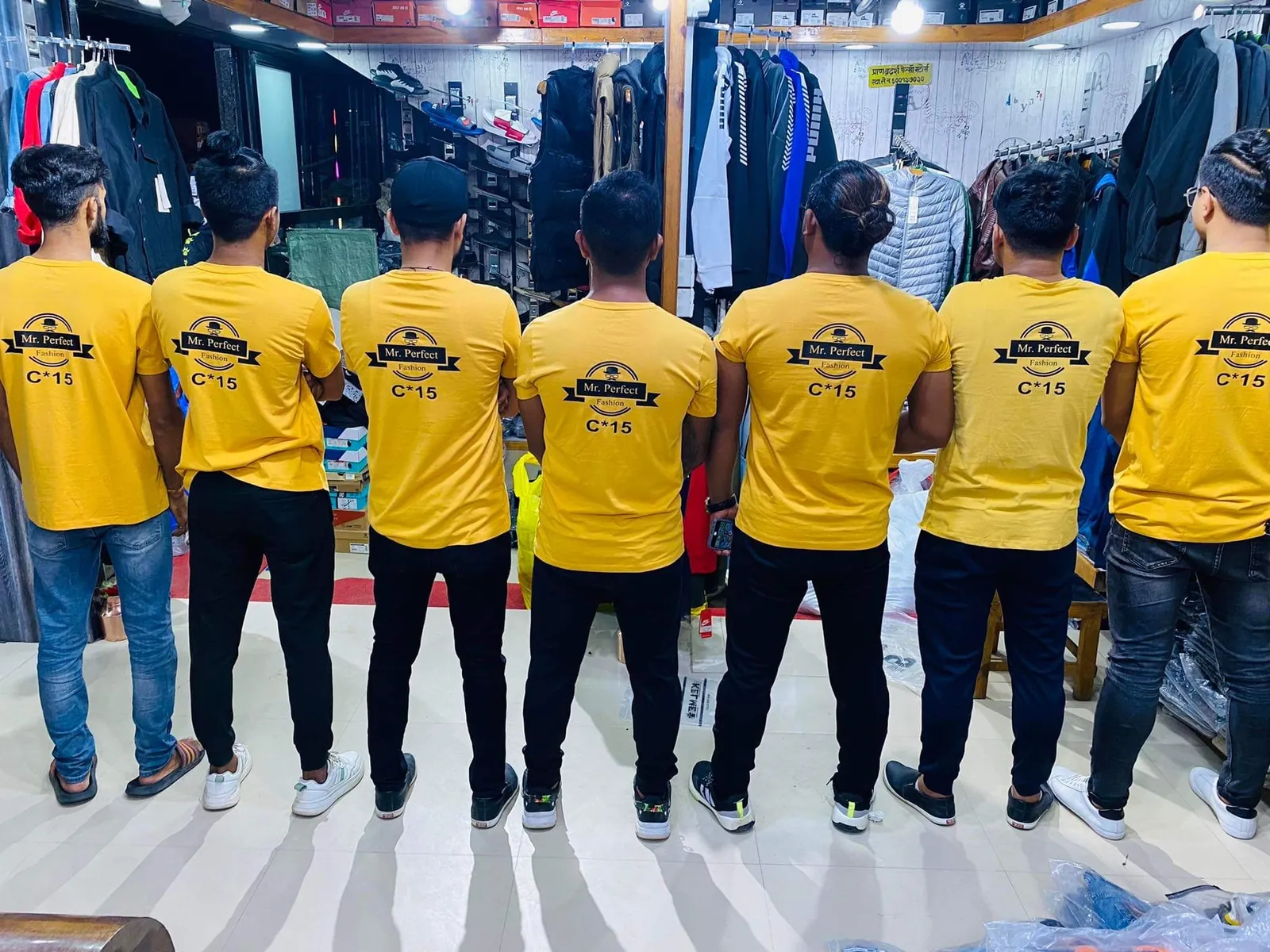
For two generations, "imported" was the highest compliment Nepali menswear could pay itself. Thai fabric, Chinese stitching, Indian brands, the assumption underneath was always the same: good clothes come from somewhere else. That assumption is dying, and we're glad to be one small part of killing it. Nepali-made and Nepali-branded menswear is having a genuine moment, and it's worth understanding why, and how to buy it well.
What changed
The quality gap closed
Nepal has always had skilled tailors and a garment industry, ready-made garments were once among the country's largest exports, built around the same workforce that today stitches for local labels. What the industry lacked was branding confidence, not needle skill. As local labels started controlling their own fabric sourcing and quality checks (rather than assembling whatever arrived cheapest), the product on the rail stopped apologising. Our own path mirrors this: C-15 exists because we chose to import fabric we could verify and control the cut ourselves, instead of reselling mystery stock. The label is the promise that this pair matches the last pair, read the full story.
The customer changed
A young Nepali professional today has seen global fast fashion up close, often literally, having worked or studied abroad, and knows its seams. He is less impressed by a foreign logo than his father was, more interested in fit and fabric, and increasingly moved by a simpler question: why does my money need to leave the country to buy a shirt? Remittance-built Nepal is discovering domestic pride as a consumer preference, the same arc South Korea and Japan walked decades earlier with their own labels.
The economics started making sense
Local supply means no import duty layered over freight layered over a distributor's margin. For the customer that translates into a visible equation at the counter: locally finished garments deliver more fabric quality per rupee. For retailers it means something even better, restocking in days rather than shipping seasons, which is why shops across Nepal increasingly stock local lines. (That supply logic is the backbone of our wholesale programme.)
What "made in Nepal" means, honestly
Almost no garment anywhere is 100% single-country, fabric, hardware, thread and labour routinely cross borders. Nepal grows little cotton; quality denim fabric is imported by everyone, including us. The honest local claim is about where the value and control sit: fabric selected and verified locally, cutting and finishing done here, quality answered for by someone you can visit. A brand that stands behind its product from a shop you can walk into is "local" in every way that matters to the man wearing it. Be suspicious of vaguer claims, patriotism is also a marketing sticker.
How to buy local well
- Judge the garment, not the flag. Check stitching density, seam finish, hardware weight and fabric hand-feel exactly as you would any import. Good local labels welcome the inspection; that's the point of them.
- Use the local advantage: the counter. A local brand can alter, repair and answer for its product in person. Free alteration and same-day repair, standard at our shop, are services no foreign label at the same price point offers in Nepal.
- Expect consistency, and hold brands to it. The real test of a label is the second purchase. If size 34 this season fits like size 34 last season, the brand is controlling production; if not, it's assembling. This is precisely why we fixed C-15's specs.
- Mix heritage in. The strongest expression of local dressing isn't a logo, it's Dhaka fabric details and heritage pieces worn with modern basics, as covered in our heritage guide.
The retailer's view from behind the counter
Wholesale buyers see the shift most clearly, because their money votes weekly. Five years ago a retailer from outside the valley stocked whatever import container arrived cheapest, accepted the size chaos, and passed the returns problem to his customers. Today the same retailer asks first about consistency, will the next batch match?, and second about restock speed, because a hot-selling size that takes a season to refill is a missed festival. Local supply wins both questions by geography alone. That is why our fastest-growing wholesale accounts are shops that once sold imports exclusively, and why the question they ask has changed from "what is cheapest?" to "what can I promise my customers again next month?"
The price question, answered straight
Is local cheaper? At equal fabric quality, meaningfully, the import chain's duty, freight and middlemen are real costs that buy the customer nothing. But the honest comparison is not local versus import at the same sticker; it is what each rupee buys. A Rs. 2,850 locally finished jean built on verified 13.5 oz fabric is competing with imports at Rs. 4,000-plus once quality matches. Where imports genuinely win, technical outdoor fabrics, certain premium knits, we say so and stock accordingly. Local pride that requires ignoring the garment is just imported marketing in a topi.
Where this is heading
The trajectory is visible on New Road every festival season: more local labels, better finishing, growing customer trust, and a slow shift of "imported" from compliment to mere description. The next steps for the industry are fabric development closer to home and export confidence, Nepali streetwear labels are already testing foreign markets online. None of that requires the customer to be a patriot; it requires the product to keep being worth the money. Our bet, staked on our own name, is that it will be.
Come handle the evidence yourself: the C-15 line is on the rail at Shop B2, positioned to make the comparison with any import an easy conversation. Ask to see the specifications a pair is built to, we keep them at the counter precisely so the made-in-Nepal claim can be checked by hand rather than taken on faith.
References & further reading
Come try it in person. Everything in this guide is on the rail at Shop B2, Ranjana Mall, New Road, Kathmandu, open daily 10:00 AM – 7:00 PM. Directions and contact.