
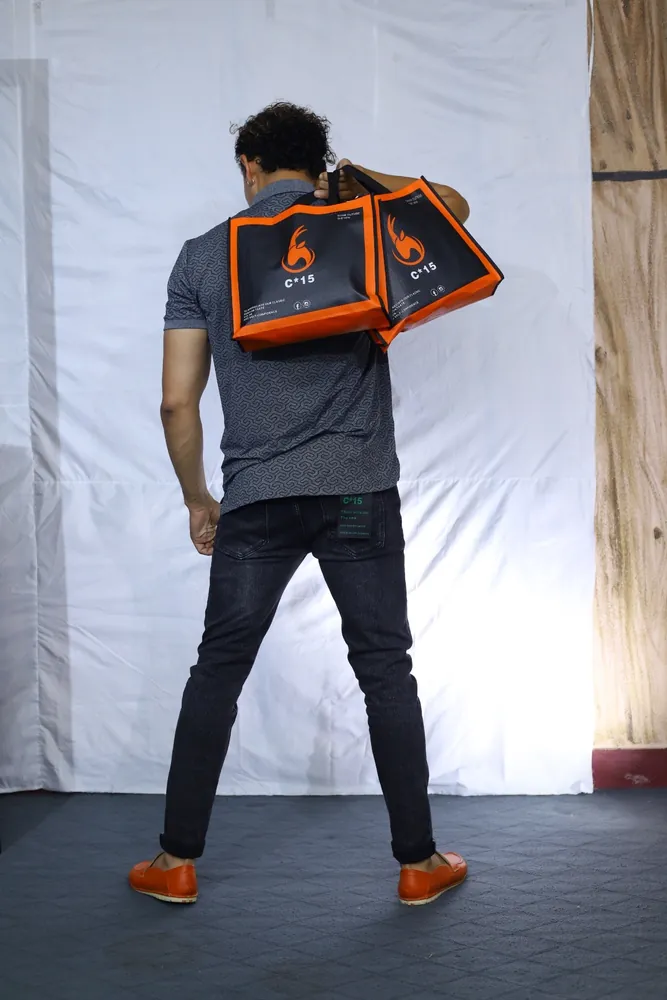
Two men wear the same shirt and jeans. One looks assembled, the other looks dressed, and the difference is riding on perhaps three small objects: the belt, the shoes, the watch. Accessories are where menswear's price-to-impact ratio peaks, and also where most wardrobes are weakest, because accessories get bought as afterthoughts with whatever budget survived the clothes. This guide flips that order: the finishing layer, treated as the system it is.
The hierarchy: where accessory money goes first
- Shoes. The most-looked-at item on a man after his face, and the loudest quality signal in any Nepali meeting room, as every guide on this journal repeats because it keeps being true.
- Belt. Seen every single tucked-in day, touching every outfit, and cheap to get right once.
- Watch. The one piece of jewellery every dress code on earth permits.
- Bag. Daily in your hand or on your back, effectively clothing.
- Everything else, caps, scarves, rings, socks with opinions, after the four above are settled.
Shoes: the two-pair foundation
A working Nepali wardrobe stands on two pairs: one clean sneaker in white or black for daily life, and one leather shoe in brown or black for offices, weddings and functions. Brown leather is the more versatile first buy, it dresses down to chinos in a way black refuses to. The maintenance economy is brutal and simple: thirty seconds of brushing per week roughly doubles a shoe's presentable life, and in monsoon a rest day between wears prevents most of what kills footwear here. Sizes run 39–45 on our rack; try them with the trousers they'll live under.
The belt: one rule, one upgrade
The rule you already know from the colour guide: belt leather matches shoe leather, brown with brown, black with black. The upgrade most men skip: full-grain leather with solid hardware, like our brass-buckled belt, which outlasts five fashion belts and ages into character instead of cracking. Width matters too: 3–3.5 cm dresses formal, 4 cm casual. And the belt should close on a middle hole, a belt on its last hole is a size note, not a style choice.
The watch: permission to be simple
The safe-and-stylish zone is wide: a clean three-hand watch, 38–42 mm, on leather or steel, complicates nothing and finishes everything. Strap logic follows leather logic, tan and brown straps with warm outfits, steel or black with cool ones; a second strap is the cheapest watch collection there is. Smartwatches are fine daily but read casual; on formal occasions the analogue face still carries more weight than any complication. Our counter selection stays deliberately minimal for exactly these reasons.
The bag: the accessory that is really clothing
A stretched free-conference tote can undo an outfit that took years to assemble. The working answer for most Kathmandu men is a structured backpack, laptop-padded, water-resistant base for monsoon pavements, hardware that doesn't rattle, which reads professional on a bike and in a lobby alike. The one-bag rule of thumb: if it would look wrong sitting on the meeting table beside you, it's the wrong bag for that day.
Caps, scarves and the small signals
A plain, well-shaped cap is legitimate smart-casual equipment; a sun-bleached promotional one is not. In winter, a scarf in a neutral or a Dhaka weave adds more style per rupee than any other cold-weather purchase, the heritage accent working exactly as the heritage guide prescribes. Socks deserve one sentence of respect: matched, dark and hole-free for shoes-off season, which in Nepal is wedding season, festival season and every home visit, most of the calendar.
The three-accessory audit
Before leaving the house, count the pieces that want attention: watch, ring, bracelet, cap, statement socks, loud belt buckle. More than three and the outfit is talking over itself, the accessories version of the one-statement rule. Subtract until calm. The finished state of a well-accessorised man is that nobody can name what he's wearing, only that it all agrees.
Monsoon-proofing the small goods
Nepal's wet season is hardest on exactly the items this guide promotes, so the care rules earn their place here. Leather belts and straps dry naturally after a soaking, never on a heater, which cracks them, and take a fingertip of leather conditioner (or the traditional dab of coconut oil, sparingly) twice a season. Watches deserve one honest check of their water resistance before the first June downpour, and leather straps deserve a rest-day rotation exactly like shoes. Bags live longest with a rain cover stuffed in the bottom pocket and a monthly emptying-and-airing, because a damp bag interior quietly ruins everything carried in it. Ten minutes of monsoon discipline preserves years of accessory money.
What to skip entirely
The accessory category collects more wasted money than any other, so the skip list earns its place: novelty belt buckles that fight every outfit; a drawer of near-identical black caps; bracelets bought in threes that read costume past age twenty-five; and the second-watch itch before the first watch has a second strap. The audit question before any accessory purchase is the same one the capsule guide asks of clothes: name five outfits it joins. Accessories that can't answer are souvenirs, and souvenirs belong on shelves, not wrists.
Accessories as gifts, solved
Half the accessory purchases at our counter are gifts, Tihar, birthdays, the brother leaving for Australia, and accessories are the safest menswear gift there is, because they skip the size problem entirely. The reliable ladder: belt (know his trouser size, or take a photo of his current belt), then wallet, then watch, then cap. We wrap, and we keep the receipt open for quiet exchanges, which the recipients of surprise belts occasionally appreciate.
Building the kit without waste
In purchase order: brown leather shoes and matching belt (one decision, as the capsule guide counts them), then the daily sneaker, then the watch, then the bag. Total outlay is less than one imported jacket, and unlike the jacket, all of it touches every outfit you own. That's the accessory arithmetic, small objects, total coverage. The counter at Shop B2 keeps all of it within arm's reach of the changing-room mirror, which is not an accident.
References & further reading
Come try it in person. Everything in this guide is on the rail at Shop B2, Ranjana Mall, New Road, Kathmandu, open daily 10:00 AM – 7:00 PM. Directions and contact.