
Nepal has no single office dress code; it has at least four, running in parallel across the same city. The bank teller, the startup developer, the government section officer and the site engineer all "dress for work", and would each look out of place at the others' desks. Most dress-code confusion we hear at the counter comes from men moving between these worlds: the new graduate joining a bank, the government veteran consulting for an INGO, the developer summoned to a ministry meeting. Here is the field map.
The four codes, mapped
1. Banking and finance: the formal standard
Nepal's banks remain the strictest civilian dress environment: formal shirt (tucked, always), dark formal trousers, leather shoes, and often a tie for customer-facing roles, many institutions specify uniforms or colour codes outright. The unwritten rules matter as much: sleeves buttoned or neatly rolled to the forearm and never above, a belt that matches the shoes, and grooming kept conservative. If you're joining this world, build depth in the basics: three solid shirts, two pairs of formal trousers, one dependable pair of black shoes. Nothing exciting, everything correct, in banking, correct is the excitement.
2. Government offices: formal with a national accent
The sarkari dress culture is formal but distinct from banking: the daura-suruwal and Dhaka topi remain respected, required on certain ceremonial occasions and worn by choice by many senior officials, while Western formal shirts and trousers cover the ordinary day. For visitors, the code is simple respect: shirt and formal trousers minimum for any meeting where you want something processed. The observation every Nepali knows: dressing seriously in a government office is treated as a form of courtesy, and courtesy moves files.
3. The startup, agency and INGO belt: smart casual with range
Kathmandu's newer economy, tech companies, creative agencies, development organisations, runs on the collar-trouser-clean-shoes formula we detail in the business casual guide. Dark jeans pass; polos pass; clean sneakers pass. The range trap is real, though: these offices also host board meetings, donor visits and ministry calls, and the man in the room who couldn't scale up on demand is remembered. The insurance policy is one blazer on the office chair and one formal shirt in the drawer. Cost: modest. Value on the day the minister visits: total.
4. Field and site work: durability with authority
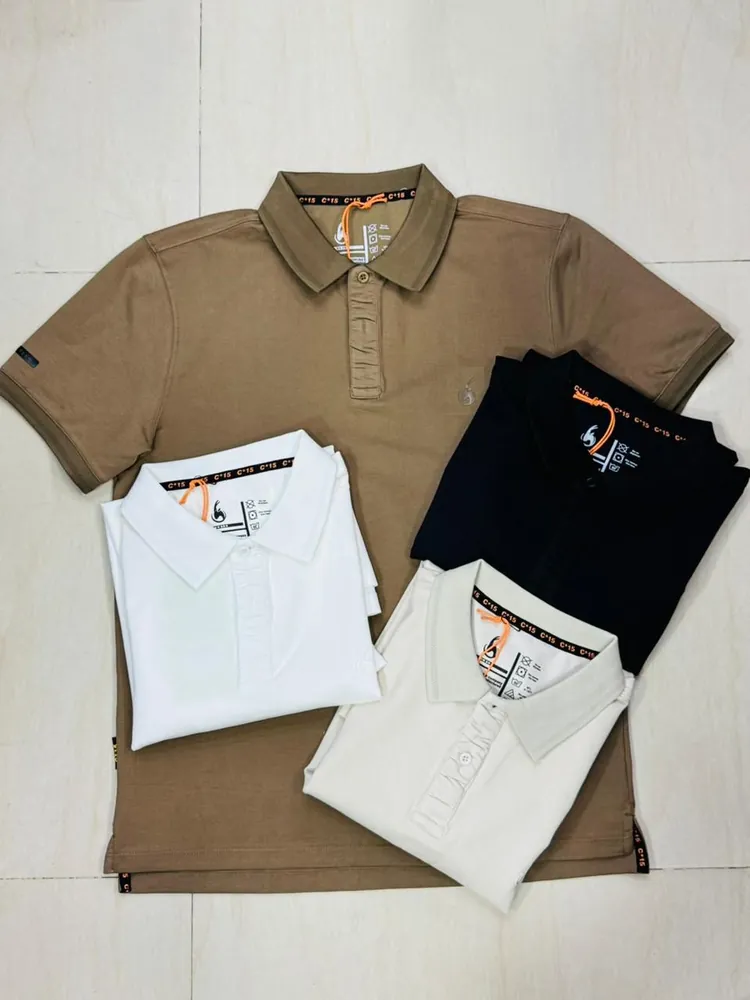
Engineers, project managers and supervisors dress for two audiences at once, the work and the workforce. The uniform that has evolved: tough trousers or dark jeans (the C-15 Straight lives this life on many customers), a polo or sturdy shirt with a collar, and boots or solid shoes. The collar is doing quiet work in this world: it marks the supervisor at a glance in a context where authority is partly visual. A site man's second kit, kept clean for the office days, completes the system.
Moving between worlds
The practical wardrobe answer for men who cross codes weekly is a ladder, not separate wardrobes: pieces that step up or down with one change. Dark chinos wear to every world; a formal shirt tucks for the bank and rolls its sleeves for the agency; the blazer formalises anything under it. Build around interchangeable neutrals, navy, charcoal, white, sky, and the ladder stays connected. Build around statement pieces and every rung needs its own shopping trip.
Fridays, festivals and the code exceptions
Every code above has sanctioned exceptions worth knowing. Many banks and corporates run relaxed Fridays, which means the startup formula, not the weekend one; the man in shorts discovers this only once. Festival-eve office days loosen everywhere, and a Dhaka topi or kurta element is warmly read in even formal institutions during Dashain week. And office picnics, retreats and team outings are their own trap: "casual" there still means photographed-beside-your-CEO casual. The polo-and-chino default has never once failed a company picnic in the history of company picnics.
The seniority effect
One pattern holds across all four worlds: as men rise, their clothes quiet down and sharpen up. The junior developer's graphic tee becomes the CTO's plain oxford; the section officer's ambitions are visible in his ironing. This isn't submission to convention, it's the discovery that clothes which fit well and say little let the work speak. If you're dressing for the role above yours, the formula is not more expensive clothes; it's better-fitted, better-kept versions of quiet ones. Our free alteration counter exists substantially for this purpose.
The interview special case
Interviews deserve their own paragraph because the code inverts: you dress for the institution's formality plus one notch, whatever the daily dress code is. Bank interview: full formal, tie on. Startup interview: the smart end of business casual, the blazer goes, even though the job won't require it weekly, because the interview is a formality ritual, not a preview of Tuesday. Government service exam and interview season fills our alteration counter every year for exactly this reason: the candidates who look effortless spent one afternoon preparing the outfit, and the ones who look uncomfortable are meeting their own suit for the first time that morning. Whatever the role, wear the interview outfit once beforehand, walked in, sat in, ridden in. Clothes rehearse worse than answers.
The starter kits, summarised
- Bank-bound: 3 solid shirts, 2 formal trousers, black shoes, matching belt, one tie better than needed.
- Government-facing: the bank kit, plus awareness of ceremonial days; a daura-suruwal in the cupboard if your role attends them.
- Startup/agency: 2 shirts, 1 polo, dark chino, dark jean, clean sneakers, the emergency blazer.
- Site: 2 tough trousers or jeans, 3 collared hard-wearing tops, boots, and one clean office kit held in reserve.
Tell us which world you're dressing for, or which two, and we'll build the ladder with you at the counter. Team and uniform orders for institutions run through business orders.
References & further reading
- Daura-Suruwal, official dress contexts (Wikipedia)
- Business casual (Wikipedia)
- Banking in Nepal (Wikipedia)
Come try it in person. Everything in this guide is on the rail at Shop B2, Ranjana Mall, New Road, Kathmandu, open daily 10:00 AM – 7:00 PM. Directions and contact.